The Sexiest Mistresses at the Chalet School

Today we have a post from a highly esteemed guest – those of you who like to read Girls’ Own fanfiction will surely be familiar with Finn’s Brothers in Arms and Tea and Militancy. She has also just started her own wonderful blog, Outskirts of the Twenties. Finn joins us today to guide us through the tricky process of selecting a mistress from those available at the Chalet School.


When Abi asked me to compile a list of the sexiest Chalet School mistresses, I thought, that should be easy. After all, Nell Wilson is one of the most attractive women in fiction, isn’t she? But then I got to thinking about it and realised that, while my own idea of sexy is someone with a wicked tongue (steady on at the back!) and a steely determination, that might not appeal to everyone. Therefore, dear reader, I have changed my brief (oh, do be quiet)! Instead of a top ten list, I have devised a pick-your-own set of sexy attributes, and have classified our mistresses accordingly. Without further ado, here are my suggestions!

Beauty

Beauty is a conventional, though highly subjective form of sexiness; it is also not a great deal of use in refining our search for sexy CS mistresses, since so very many of them are amazingly attractive, with elusive beauty and clear complexions, not to mention their terribly trig outfits.

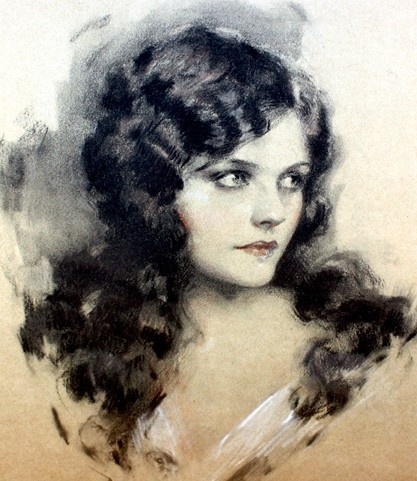
But there are a few that stand out in their appearance. Con Stewart is a fiery-Beautytressed siren, and tall with it; Biddy O’Ryan with her tumbling black locks and petite Irish beauty, is another stunner; Grizel Cochrane, small, curly-haired and fair, is described as very good-looking, though I suspect some of her beauty is lost from her face, given how miserable she seems to be much of the time.
See also:

Kathie Ferrars – petite, fresh, young (see also Unavailability, below)

Hilda Annersley – check out those eyes! (see also The Dominatrix Effect, below)

Gillian Linton – quietly pretty, prettily quiet (see also Wholesome Health, below)

Madge Bettany/Russell – elusive, elfin, climbs trees, what’s not to like? (see also CookeryThe Dominatrix Effect, below)

Everyone else, really, apart from Nell Wilson. And even she’s pretty damned hot (speaking entirely subjectively, of course).

Sarcasm

It may be the lowest form of wit, but sarcasm is a sign of a sense of humour, and a GSOH is one of the sexiest traits around (look in any Personals column and Sarcasmyou’ll see I’m right). Furthermore, it can be an immensely useful teaching aid (I am minded of a friend of mine who, in his first piano lesson with a very eminent teacher, played through his piece and, after he finished, had the following sympathetic remark: “Darling, I’m so sorry about your disability.” “What disability?” sez he. “Well,” sez, the Eminent Personage, “your left foot seems to be entirely useless!”). Anyway, there is very little as sexy as watching the person you fancy doing their job well, so here is my sarcastic selection.

Nell Wilson is the greatest proponent of the fine art of sarcasm in the Chalet School novels, but Grizel Cochrane comes a close second (though perhaps with rather less of  genuine sense of humour than Nell). Pam Slater is also known to be rather cutting, what with her references to back-street slums and being a tartar in lessons.

See also:

Mollie Maynard – known to be scathing about Joey’s bad mathematics (see also Wholesome Health, below)

Ivy Stephens – she may have taught juniors, but she still had a tongue on her. (Tongue! Filthy!)

Matron Lloyd – a sharp tongue and a starched uniform, nothing more need be said (see Starched Uniforms, below).

Frenchness

Because there’s nothing that says “sexy” like a real French accent, especially Frenchnessuttered with those low tones favoured by the Chalet School. And if Allo, Allo is anything to go by, you never know WHAT they might be wearing underneath those trig tweeds!

Jeanne de Lachennais is the first really sexy French CS mistress, but Julie Berné wins points for being a genuine Parisienne (we ALL know what they get up to in Paris! Phwoar!)

See also:

Simone Lecoutier – she had “gifted French fingers” – golly! (see also Cookery, below)

Thérèse Lepattre – she utters ejaculations in French. Filthy! (see also The Dominatrix Effect, below)

Wholesome health
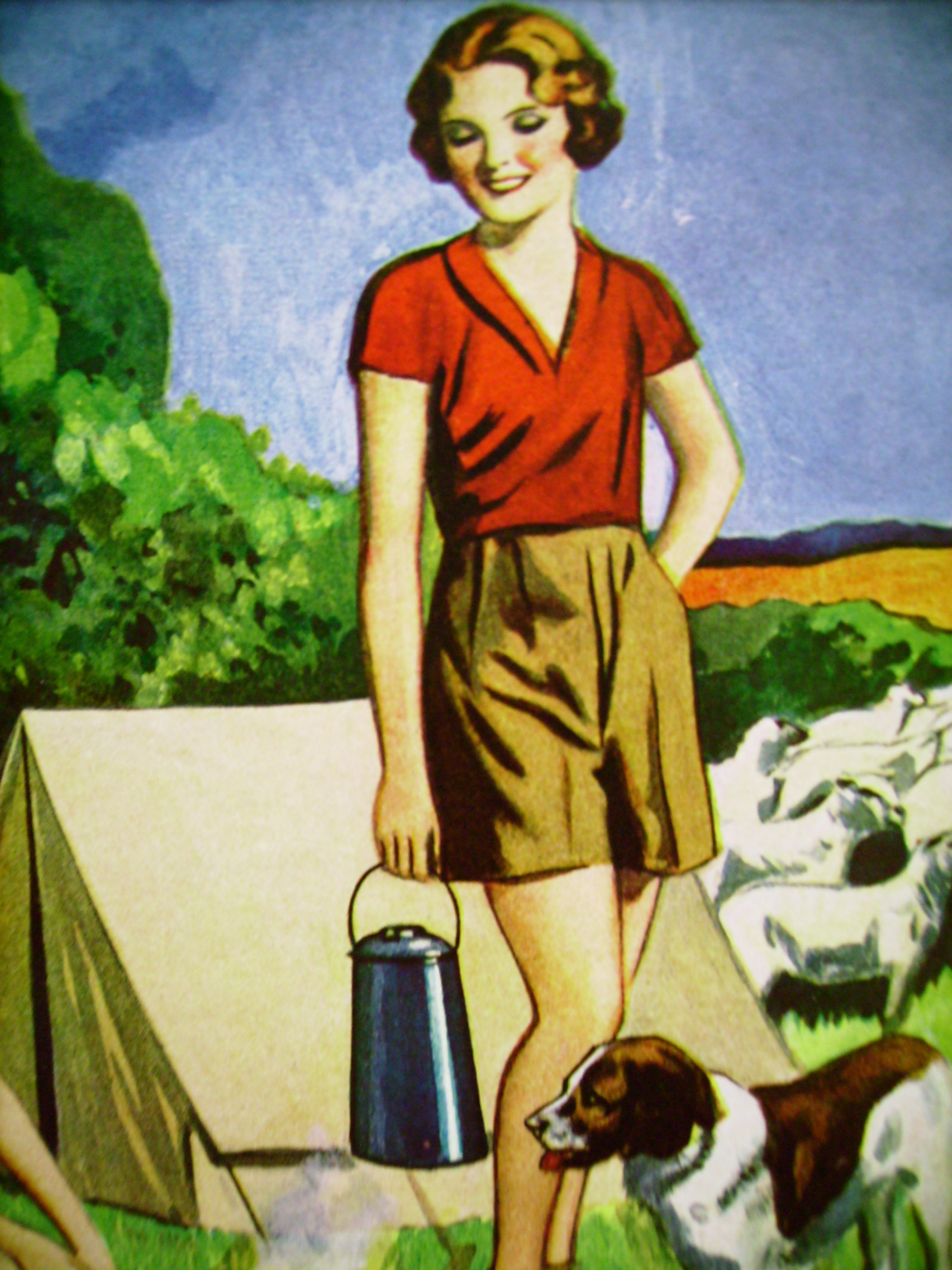
Wholesome healthNow, this might be an unusual selection, but there are some people that go for wholesome as a sexy characteristic in a woman. I don’t know whether it is the underlying suggestion of the domestic bliss to come, the rosy glow (not sweat, dear, never sweat!) that comes from a woman whose energies are focused entirely on healthy, strenuous exercise, or the delight that one gets from corrupting such innocent purity, but it seems to have done it for lots of the chaps in the series and, as such, deserves to be counted.

Hilary Burn merits a mention on this list, as there is nothing more robustly
healthy than a games mistress, and all that anatomical training she did will have been more concerned with muscle groups, digestion and the respiratory tract than with the reproductive system. Also in this group are Mollie Maynard, the English rose of the Tyrol days, who went home to look after her mother, and Ivy Norman, the Kindergarten sweetheart who didn’t like big girls.

See also:

Biddy O’Ryan – despite her Irish wildness, she panicked when her hat blew away (God forbid a man should see her hair!) (see alsoBeauty, above)

Gillian Linton – the artist chap she married wanted to paint her like one of his French girls (see also Frenchness, above.)

Unavailability

UnavailabilityAs we all know, nothing is as guaranteed to spark attraction than knowing someone is off limits. Nancy Wilmot and Kathie Ferrars are the obvious couple in this category; their predecessors in the Tyrol days, Nell Wilson and Con Stewart, are also valid entrants.

See also:

Hilda Annersley – any woman who gets herself the nickname “The Abbess” is flying high in the skies of unavailability (see also The Dominatrix Effect, below)

Any CS mistress who is married. By the end of the series, that’s quite a lot. Take your pick.

Cookery

A handy skill as regards domestic bliss – the way to a person’s heart, and all that – but this category has an extra sexy edge to it: food and sex go together like strawberries and cream, chocolates and champagne, chilli sauce and…no, wait, let’s leave chillis out of the bedroom.
DIGITAL CAMERAIn this category: Anna Mieders, a woman who can bring a banquet to bed, and whip up a mean breakfast the morning after. Also Matron Lloyd – there are more uses for jam than simply spreading it on toast.

See also:

Madge Bettany/Russell – a woman with a gift for sweets and desserts. (see also Beauty, above, The Dominatrix Effect, below)

Simone Lecoutier – she has her own cookbook – what couldn’t she knock up? (see also Frenchness, above)

Karen and Anna – not technically mistresses, but I’ll stretch a point if they’ll bring some of their famous featherbeds of whipped cream.

Starched Uniforms

UniformsOne for the connoisseur, but uniforms have been known to drive people wild with lust. Matron Lloyd is the obvious choice for this category, but special kudos must also go to Gertrude Rider for having such a filthy surname.

See also:

Margot Venables – mother of six, so she must have had something going for her.

Barbara Henschell – ooh, Matron!

Gwynneth Gowland – so good, they named her twice.

Special exclusions from this category:

Matron Webb, for having a voice like the whistle on a steam train.

Matron Besley – Nurse! The screens!

The Dominatrix Effect

Another category for the specialist. Teachers are attractive simply by their authoritative role, and headmistresses are mistresses with added authority, and canes. Steady on.

DominatrixThe obvious candidate is, naturally, Hilda Annersley, a woman able to reduce a child to tears with a mere glance of her grey eyes. EBD never tells us what went on in those “sessions with the headmistress”, but I’m fairly sure Colonel Black didn’t keep coming round just to advise her on blackout regulations.

See also:

Madge Bettany – something must have kept Tristan Denny coming round at all sorts of unearthly hours to “talk about the madrigal society” (see also BeautyCookery, above)

Thérèse Lepattre – thigh-high boots and a French accent – oh, wait, is that my imagination? (see also Frenchness, above)

Mabel Bubb – a “strict disciplinarian” who wanted to whitewash the windows. I think we all know why…

So there we have it – my listings for the sexiest mistresses in the Chalet School series. I hope that by narrowing down your favourite traits you can pick out your own sexy CS mistress. As for me, I’m off to the Auberge with Nell Wilson, but before I go, there’s just time for my:

Special Category

No list of sexy CS anything would be complete without a mention of Joey Maynard. It is suggested that pregnancy is a very attractive trait in a woman – something to do with the appeal of obvious fecundity – and Joey was certainly pregnant enough times to draw attention to herself, wanted or unwanted. And the number of pregnancies does suggest that she and Jack Maynard spent a fair old amount of time in the bedroom. Goodness knows how they fitted it into the day. Perhaps she had all the San doctors on a rota – actually, that might explain the very varied colouring of her offspring. Whatever her secret, it could well be that Joey Maynard was the Sexiest Chalet School Mistress of all!


Once again, don’t forget to take a trip over to Finn’s blog, Outskirts of the Twenties!
Whyteleafe: A School with a difference

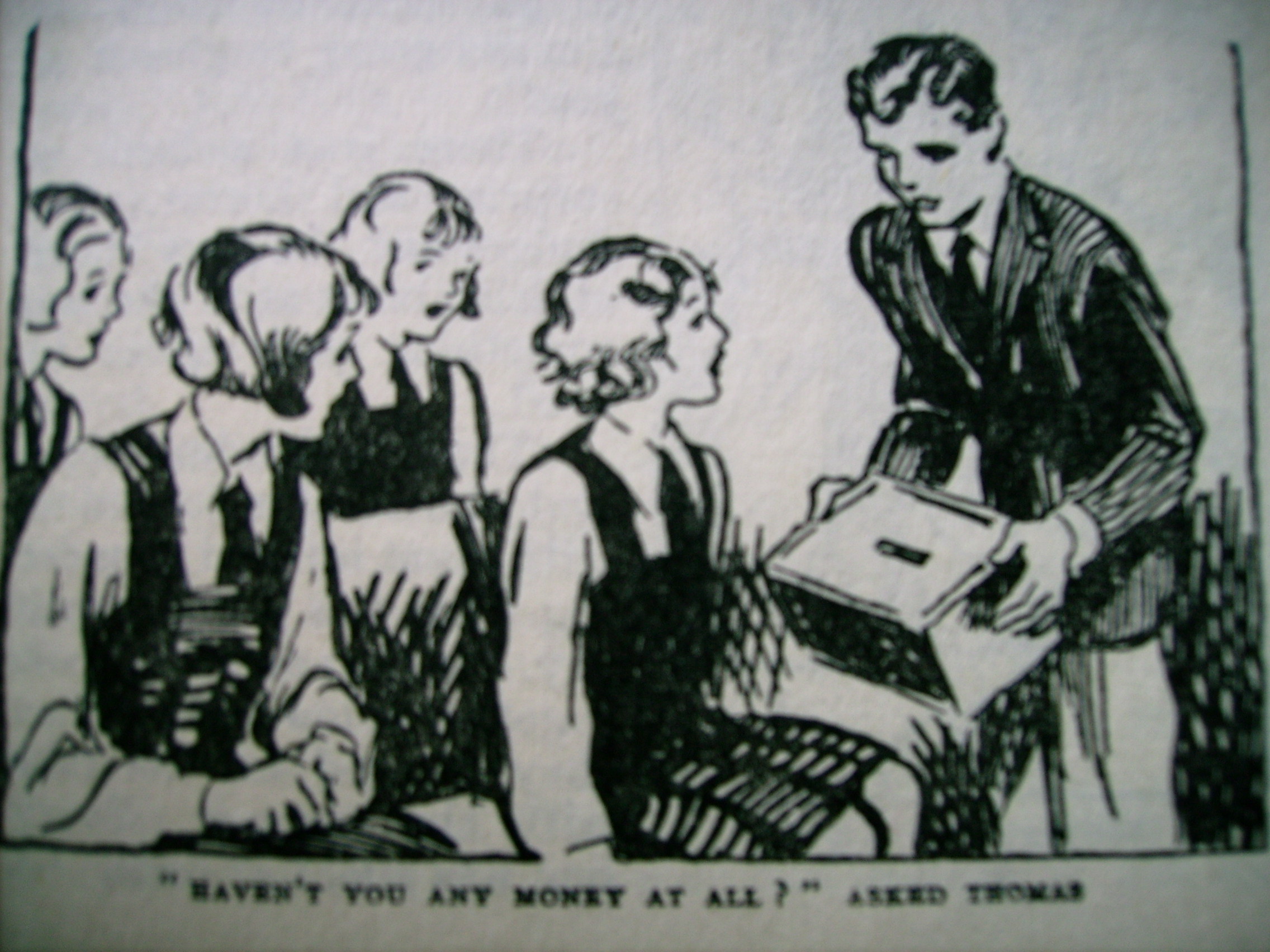
"Haven't you any money at all?" asked Thomas.

“Haven’t you any money at all?” asked Thomas.

Enid Blyton’s Naughtiest Girl books are not Girls’ Own in the traditional sense, for the school includes boys as well as girls. Having said that, they fit many of the Girls’ Own traditions and tropes, and for such “simple” books (as they have often been called) are surprisingly interesting, as well as simply jolly good stories.

The majority of Girls’ Own schools are fairly similar to one another. They feature medium sized schools of between fifty and two hundred girls, run along traditional lines which are more or less still in use today. Misdemeanours are punished by lines, order marks or of course incarceration in the San. Rules are many, varied and unchangeable, not to mention frequently broken, and activities for each part of the day are carefully prescribed and controlled.

With the Naughtiest Girl books, though, Enid Blyton broke a mould which was later to be smashed to smithereens by Mabel Esther Allan. Whyteleafe is perhaps the only one of her three best-known schools which could have dealt with such a problem as naughty, spoiled, selfish Elizabeth Allen. The change in Elizabeth’s character is nicely dealt with and feels emotionally realistic, and some at least of the secondary and minor characters are appealing. But it’s the setting that really makes the Naughtiest Girl books so fascinating

The school is what is often described as “progressive”. The children make the rules, but they are also responsible for enforcing them as well as for sorting out other problems the children might have with one another or with school arrangements. This happens in weekly Meetings led by a Jury of Monitors and two Judges, William and Rita. The latter two are presented almost as God and Goddess in their own small realm (there are many Goddesses in Girls’ Own literature, and Rita is typical of them).

As previously mentioned, Whyteleafe School is also co-educational. This was almost certainly a practical measure on Enid Blyton’s part, since the stories were originally published in Sunny Stories, aimed at both boys and girls. Even so, it’s original for a school story of its time. Even more impressive is the fact that the school, while containing both boys and male masters, is run by two women, Miss Belle and Miss Best. Women and girls have equal power with men and boys, and often the balance of power in fact seems to lie with the females of the school – a hugely empowering message at a time when there was still great discrimination against women.

On the other side of the argument, one must wonder what parents and relations made of their children being made to give up all their money to be donated to a school pot and divided among the pupils. One can see the appeal of this socialism in action and the theoretical fairness of it, but surely it’s not realistic that either children or parents would not resent it.

It has been suggested that Whyteleafe was if not actually modelled on, then at least influenced by, A. S. Neill’s famous progressive school Summerhill. Summerhill, run almost entirely by the students, seems to have been enough of a success that it is still going in more or less the same form today. Whyteleafe is not so radical in its outlook – it seems unlikely that Miss Belle and Miss Best would have permitted the school to banish all rules (as happens periodically at Summerhill, only for them to be soon reinstated when chaos palls). Classes are compulsory at Whyteleafe, unlike Summerhill, although at times a higher level of tolerance of misbehaviour is shown than in many Girls’ Own books. For example, when on her first night Elizabeth claims she has a guinea-pig with a face like Miss Thomas’s she is neither “sat on” nor punished, though disapproval is shown by her classmates.

Of course there are some similarities with other more traditional Girls’ Own schools. Whyteleafe may be more tolerant in some ways, but its pupils do not hesitate to administer their rules as strictly as any other schools. Some of these, as in all fictional (and indeed real) schools, seem entirely unnecessary – such as that which states that no one except a monitor may have more than six items on her dressing table. This rules is so strictly enforced that three photographs of Elizabeth’s are confiscated on her first night, which seems rather harsh even as a result of the rudeness she exhibited on that occasion.

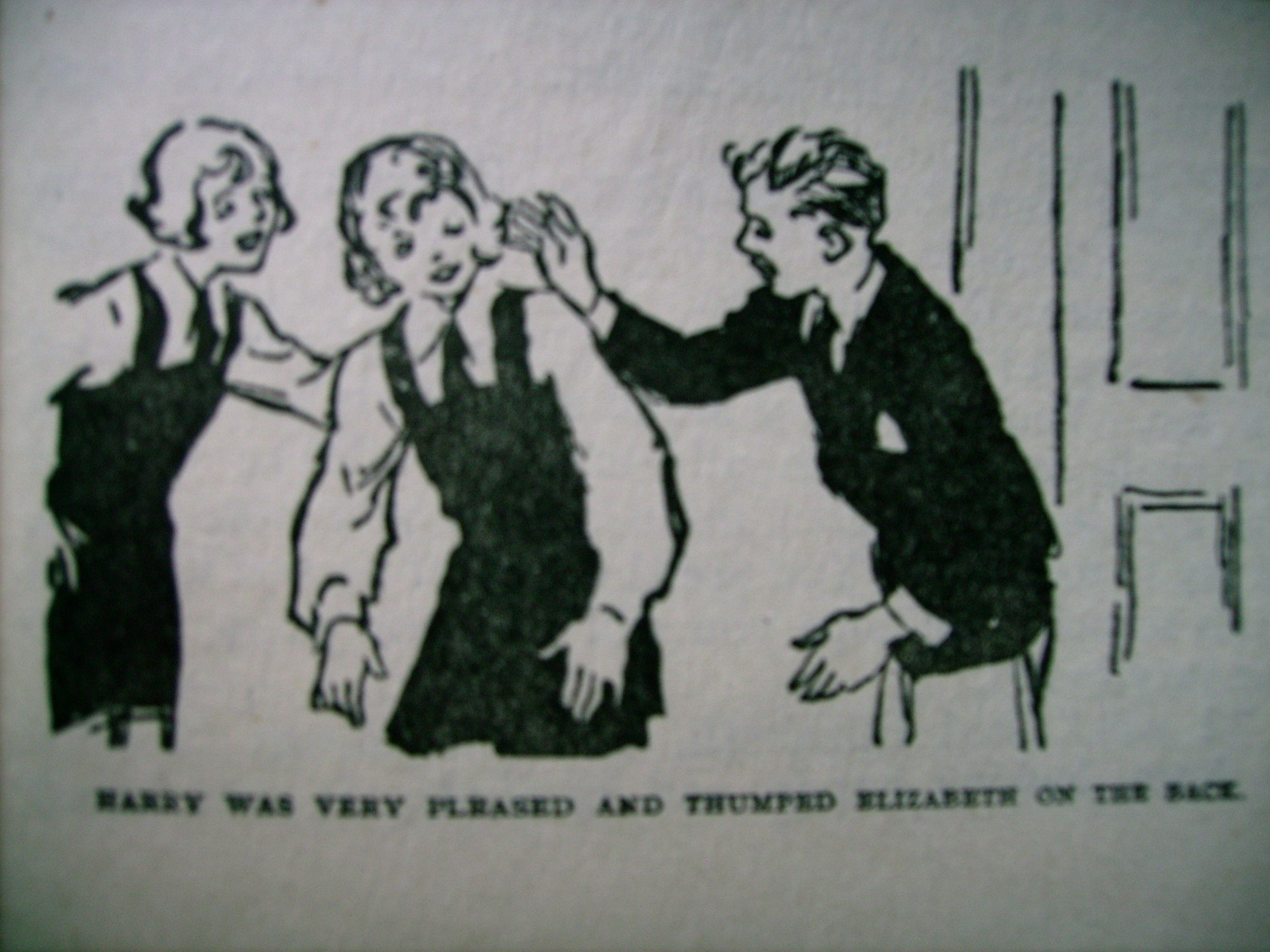
“Harry was very pleased and thumped Elizabeth on the back.”

One of Whyteleafe’s greatest similarities to most Girls’ Own school is the way in which pupils’ better qualities are drawn out and lauded. This is something which many Girls’ Own schools claim to do, although Enid Blyton was particularly keen on it. Courage in particular is highly valued – a very Girls’ Own virtue. The delight of the entire school when Elizabeth bravely stands up and declares her intention of staying at school is huge and heartwarming, as it is when it is discovered in The Naughtiest Girl is a Monitor that it was she who rescued a small boy from drowning.

But while values may be similar in all schools and stories, that doesn’t stop Whyteleafe from being one of the most original and forward-looking schools in the entire Girls’ Own genre. Enid Blyton is often condemned for her traditional values and simple writing, yet simple writing frequently makes for a good rollicking story. As for traditional – Whyteleafe shows that she was entirely capable of breaking all the moulds she wanted to when she felt it appropriate. There is no doubt that Whyteleafe is, even today, a school with a difference.

Trebizon: An Overview

Anne Digby’s Trebizon books were mostly written in the 1980s, but they share many of the tropes and traditions of the Girls’ Own genre. The sporty heroine with a talent for writing and a penchant for solving mysteries, the group of friends, the kind, wise headmistress, even the rivalry between school houses. I only read the later books in the series a few years ago, but since Secret Letters at Trebizon and Fifth Year Friendships at Trebizon were reprinted by Fidra Books they’re much easier to get hold of.

We start with First Term at Trebizon (1978), perhaps the Trebizon book that conforms most strongly to the Girls’ Own tradition. The action begins almost immediately, with Rebecca encountering powerful prefect Elizabeth Exton and suffering the usual friendship difficulties before settling down with those who, with their sportiness and general jolliness, are clearly the right crowd. Elizabeth Exton is a splendid villain, although she suffers from a lack of characterisation which is probably a result of the shortness of the book. Interestingly, although Elizabeth is caught and expelled for her dishonest activities, the usual end-of-the-book reform is absent, which although realistic might be unsatisfying for some Girls’ Own fans.

Second Term at Trebizon (1979) takes friendships as its theme. Rebecca’s friendship with Tish Anderson and Sue Murdoch was cemented in the first book when they backed her up against Elizabeth Exton, but this term sees their acknowledged leader, Tish, being strange and rather unpleasant to Sue. Rebecca can’t help trusting Tish, which hurts and alienates Sue even more, and Rebecca’s resolve to trust her friend is tried to the limit before everything is finally sorted out. Again, the book’s too short to allow for more than one major plot, but the theme of Second Term allows for significantly more characterisation of the main characters than First Term.

In Summer Term at Trebizon (1979) it’s Rebecca’s worries about her academic success that come to the fore. She is intelligent, but, like many Girls’ Own heroines, her weak point is maths. Unfortunately, the new maths teacher, Mr Maxwell is young, good-looking and conceives a strange liking for unpopular Roberta Jones, spending all his time coaching her and leaving Rebecca to struggle. The second thread is the raising of money for a charity and the subsequent mystery (again, a popular Girls’ Own theme) of who has stolen the Second Form’s money. It’s interesting, though, that while ‘Max’ is clearly the villain of the piece, not all of his influence is bad – Roberta blossoms under his attention and becomes much nicer as a result.

The main theme of Boy Trouble at Trebizon (1980) is obvious from the title, and here Anne Digby really diverges from the Girls’ Own tradition, where boyfriends at the age of fourteen are unheard of. In fact, it’s hardly a romance and, while Rebecca is jealous of Robbie Anderson’s liking for Virginia Slade, the major focus of the story is her instinctive trust of Robbie and determination to continue helping him, even though he comes across as a bit of an idiot. So does Rebecca’s tennis coach, David Driscoll, who also engages in a half-hearted and slightly creepy pursuit of Rebecca. Rebecca herself, despite her youth, is the one who seems sensible and mature in this book.

More Trouble at Trebizon (1981) continues the theme of boys and parties but with the added frisson of adventure – another staple of the Girls’ Own genre – when Mara, daughter of a rich shipowner, returns to school with a bodyguard. The secondary plot revolves around Lucy, the youthful genius who arrives in the Third Form at the beginning of term and ends up contributing to the adventure in no small way. Mara has been a minor character up until this, the fifth book in the series, but More Trouble at Trebizon finally allows us to get to know her a little better.

The theme of sport is one that has been important all through the Trebizon series, but in The Tennis Term at Trebizon (1982) it finally comes to the fore again, with Rebecca working blindingly hard at her tennis and making it onto the school tennis team. In addition, there’s a mysterious hoaxer in the school and Rebecca finds herself under suspicion. It’s all good, traditional, Girls’ Own stuff with a couple of nice twists and a healthy dose of coincidence.

The first and only holiday book in the series, Summer Camp at Trebizon (1982) starts oddly with an irrelevant adventure for Rebecca. As soon as she returns to school, however, the story starts properly, and the theme seems to be social issues. The girls are helping out an organisation who give holidays to city children. It’s a little implausible that in the entire camp there is only one child who gives trouble, and the sweet and sugary resolution is also hard to swallow, but the archaeological backdrop and the sun and sea mean Summer Camp is still an enjoyable read.

With Into the Fourth at Trebizon (1982) we return to the theme of friendships. Mara has to move into a single room down the corridor to make space for Swedish Ingrid, and is angry and upset because she feels left out, while Rebecca is frustrated because Ingrid starts clinging to her. In addition, Rebecca’s extra tennis coaching means that she can’t see as much of Robbie as she’d like, and the crowning blow comes when it seems that Ingrid has stolen Robbie from her. There’s another of those syrupy endings, but Anne Digby’s writing is just about engaging enough to make up for that.

Once again returning to previous themes, The Hockey Term at Trebizon (1984) is all about sport. Rebecca and her friends are obsessed with the upcoming hockey sevens tournament and Rebecca’s confidence in her tennis is knocked by brilliant Joss Vining. The second plot thread belongs to new girl Fiona, who appears to have second sight (a not unknown idea in Girls’ Own literature). As might be expected, this turns out to be trickery, but Fiona is redeemed by the discovery of her secret talent as a footballer – a typically Girls’ Own redemption. I don’t care for sports storylines, so this isn’t one of my favourite Trebizon books, but it’s still a fun read.

Fourth Year Triumphs at Trebizon (1985) once again starts with sport – by this time it’s Rebecca’s main interest. Tish’s running is also a major thread, since she conceives the plan of running to Mulberry Island and back during an extra low tide. The book’s second plotline concerns a film that’s being made of Trebizon, and Rebecca’s dawning realisation that it’s going to be a damaging mass of untruths. Once again, the dramatic conclusion is a little unlikely, but it certainly makes for a sensational story and is no less plausible than many traditional Girls’ Own stories.

The Ghostly Term at Trebizon (1990) is even shorter than the previous books and departs from the sport theme, as Rebecca breaks her wrist at the beginning of term. Most of the plot, which is surprisingly vague for Anne Digby, revolves around Rebecca’s struggles with her tennis and her meeting with old friend Cliff, inspiring much jealousy from Robbie. The theme of ghosts takes a secondary role and provides the traditional mystery for Rebecca and her friends to solve. Academic work also rears its head again, finally, in this, the eleventh book in the series.

The academic theme is once more important in Fifth Year Friendships at Trebizon (1990), when Rebecca finds that she is going to have to make a choice between being a professional tennis player and applying to enter a top university. Rebecca’s almost implausible brilliance is really highlighted in this book, although it’s no more extraordinary than that of many Girls’ Own heroines. This plot, and the secondary one about a misguided pair of twins, makes for a slightly meatier plot than that of The Ghostly Term at Trebizon, with Rebecca working extremely hard and not always dealing well with the pressure.

The real mystery of Secret Letters at Trebizon (1993) is that someone is going through Rebecca’s possessions in secret. She and her friends go to a lot of trouble to discover the culprit and it’s interesting that when they finally succeed the twist at the end seems to be entirely for narrative suspense rather than a logical development of character or even to prove a moral point, as some traditional Girls’ Own stories might try to do. The book ends with the Cliff/Robbie/Rebecca situation still unresolved, a storyline which has now continued for quite a few books.

The final book in the Trebizon series, The Unforgettable Fifth at Trebizon (1994) begins with Rebecca and Tish finding that they can’t go for their usual morning run because Mulberry Island and the headland are being sold to the Tarkuses, long-term enemies of Trebizon. There are many dramatic twists in the plot, but by now it’s fairly obvious how this storyline will end. Perhaps more interestingly to devoted readers of the Trebizon books, Rebecca is eventually forced to make a choice between Robbie and Cliff and passes her GCSEs not, fortunately, with implausible brilliance, but well enough to make a satisfying end to the book and the series.


The shortness of the Trebizon books – most of them come in at around 120 pages – means that there is very little opportunity for complex plotting, and most of the character development takes place over a number of books. Instead, each book concentrates on a specific problem to be solved by Rebecca and her friends, while themes such as academic progress and Rebecca’s increasing skill at tennis are usually spread across the series.

The Trebizon books, although they appear to deal with more adult themes than most Girls’ Own books, seem, in style and structure, to be aimed more towards younger readers. Although there is a certain amount of character development across the series, the majority of the girls and staff remain shadowy, with only one or two distinguishing characteristics. The plots are simple and the language plain and unchallenging. Anne Digby also develops an irritating habit of constantly foreshadowing future events. For example, in Secret Letters at Trebizon, Rebecca’s History results are mentioned as being the most important of all but the reason for this isn’t explained until afterwards – rather odd, since this is hardly significant as part of the book’s plot.

Despite these flaws, however, the Trebizon books are a light and entertaining read that doesn’t take up too much time and is interesting for both its similarities and differences to the traditional Girls’ Own genre. I especially recommend the first three or four in the series as nice, sensible books that are a little different and yet pleasingly familiar.